How Loud Should Guided Sleep Audio Be for Better Sleep and Less Anxiety?
If you want the short answer, guided sleep audio volume should usually be just loud enough to understand without effort, and no louder. That’s the sweet spot for better sleep and less anxiety. Most people make the same mistake: they set bedtime listening at a comfortable daytime level, then wonder why they stay mentally hooked on every word. Sleep audio works better when it fades into the background and gives your brain less to grip.
A good rule is this: if the voice feels like it’s in the room with you, it’s probably too loud. If you can still follow it when you pay attention, but it stops demanding attention when you relax, you’re close. Think “gentle presence,” not “full-on narration.” Guided sleep audio volume should support the drop into sleep, not become the main event. Especially if you’re already anxious, loud audio can keep your nervous system slightly activated even when the content is soothing.
Use the 30-Second Bed Test to Find Your Ideal Bedtime Listening Level
Here’s the easiest way to dial it in. Get into your usual sleep position. Start the audio. Set the volume a little lower than seems reasonable. Then stay still for 30 seconds. If you can catch most of the words without straining, you’re good. If you miss a few phrases but still feel relaxed, that may actually be even better. Guided sleep tracks do not need perfect comprehension to work. In many cases, partial listening helps because your mind stops trying to “complete the task” of listening.
If the voice pulls you back every time your thoughts drift, lower it one or two clicks. If you find yourself leaning mentally toward the speaker or feeling annoyed that you can’t make out key phrases, raise it slightly. That’s the balancing act. For better sleep, you want clarity without spotlight. For less anxiety, you want the sound to feel predictable, soft, and nonintrusive. This is also why a whisper-quiet level often beats a rich, immersive one. Bedtime listening should blur at the edges. That blur is part of the point.
Too Loud Can Keep You Awake, Too Quiet Can Make You Tense
People usually assume louder means more effective. Not at bedtime. Audio that’s too loud can keep the brain in monitoring mode. You may not feel fully awake, but part of your attention stays latched onto the voice, the music, or the pacing. That can delay sleep onset, increase irritation, and make overnight wake-ups more noticeable. If you’ve ever been almost asleep and then suddenly felt bothered by a phrase, a swell in background music, or a sharp “s” sound in the narrator’s voice, volume was probably part of the problem.
But very quiet audio can also backfire. If you’re trying to catch every word because the sound is right on the edge of audibility, your brain may work harder, not less. That effort can raise tension, especially for anxious listeners. The best guided sleep audio volume sits in the middle: low enough that you can let go, high enough that you don’t have to chase it. Another clue is your body. If your jaw is tight, your forehead feels active, or you’re waiting for the next sentence, adjust the volume before blaming the track itself.
Your Device Matters More Than You Think: Speaker, Pillow Speaker, Earbuds, or Headphones
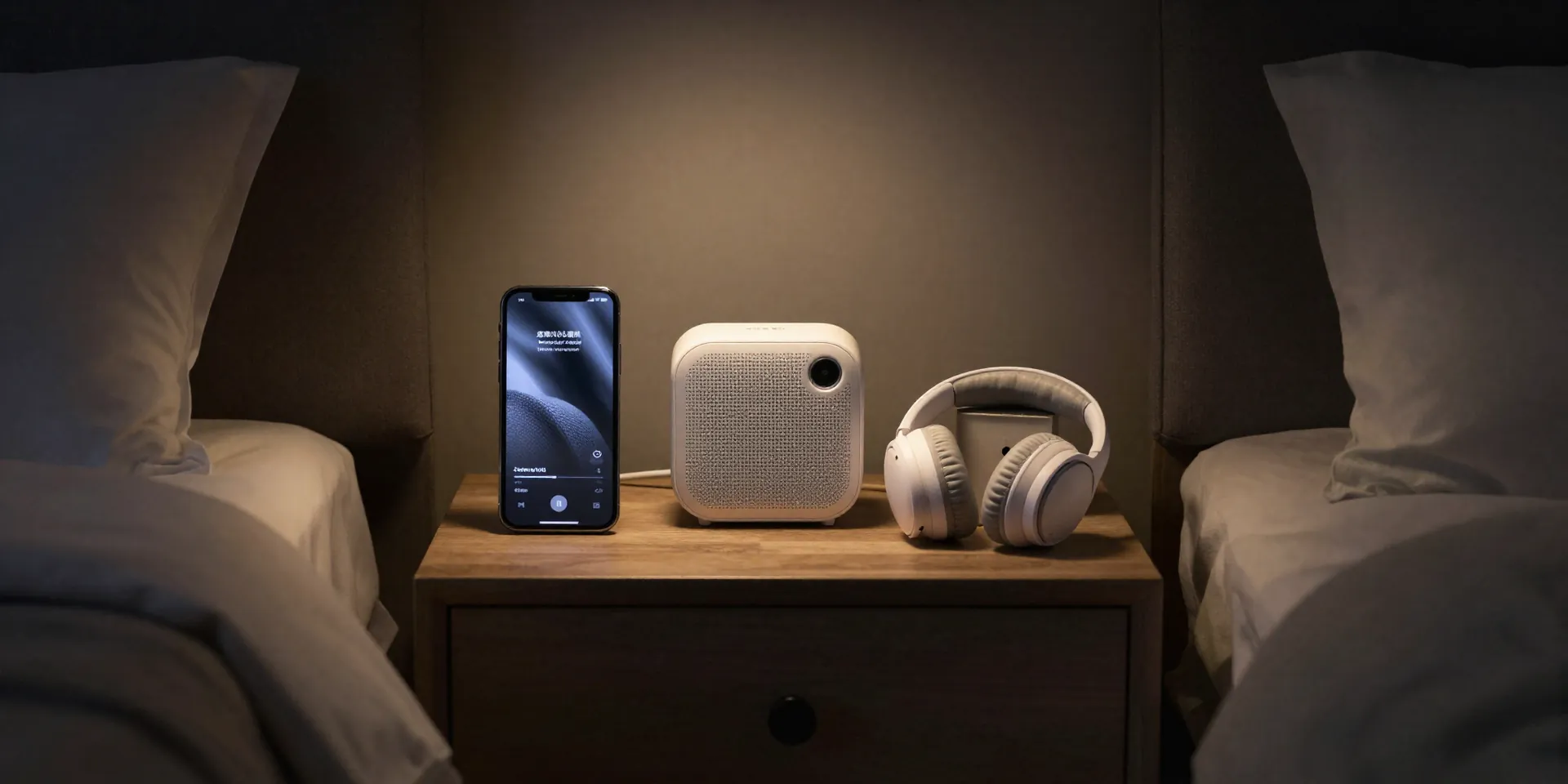
The right volume depends a lot on how the sound reaches you. A phone speaker across the room usually needs to be a bit louder because distance and bedding absorb detail. A bedside speaker can often run lower and still sound smoother. Pillow speakers are a mixed bag: some are great for private bedtime listening, others sound thin and force you to turn them up more than you’d like. Earbuds and bulky headphones are the riskiest choice for overnight use, both for comfort and for accidentally blasting sound too close to the ear.
If you share a bed, the temptation is to use earbuds so you don’t disturb your partner. Fair enough. But keep the volume lower than you think you need, because in-ear audio feels more intense even at modest settings. Better yet, use sleep headband-style speakers or a small bedside speaker pointed toward you at low volume. Also pay attention to the audio mix. A track with heavy background music, boomy bass, or dramatic shifts will require more fiddling. For better sleep, flatter and simpler usually wins. A calm voice, minimal processing, steady pacing. That’s easier to keep low without losing the benefit.
If You’re Listening for Less Anxiety, Aim for Soothing and Predictable, Not Immersive
When anxiety is the main issue, volume becomes part of the treatment. Loud, immersive audio can feel comforting at first because it covers up internal chatter. But it can also create dependence on strong external input to settle down. A lower, steadier sound tends to work better over time because it teaches your body to relax without needing to be overwhelmed by sensory input. You’re not trying to drown out your mind. You’re giving it something simple enough to ride until it stops fighting.
Predictability matters too. Choose a narrator with a stable tone and avoid tracks with sudden tonal changes, surprise music cues, or long dramatic pauses that make you wonder if the audio stopped. Those little uncertainties can spike alertness. If you’re prone to nighttime anxiety, set the volume so the voice feels constant and safe, almost like a distant companion. Not theatrical. Not intimate to the point of feeling invasive. Just there. For some people, rain or brown noise mixed underneath at a very low level helps smooth the gaps and makes bedtime listening less mentally sticky.
Small Tweaks That Make Sleep Audio Work Better All Night
Volume is the big lever, but a few practical tweaks make a noticeable difference. Use a sleep timer whenever possible. If audio keeps running at the same volume for hours, it may wake you during a lighter sleep phase. Ten to forty-five minutes is enough for most people. If you wake during the night and need help drifting back off, restart at a lower volume than the first round. Your ears are more sensitive in a quiet room at 3 a.m., and what felt fine at bedtime can feel weirdly loud later.
It also helps to lower other stimulation before you press play. Bright screens, doomscrolling, and late caffeine make you more reactive to sound, which means you’ll fuss with guided sleep audio volume more than necessary. Keep your room as quiet as you reasonably can, then let the audio sit just above that noise floor. If the HVAC, traffic, or a snoring partner competes with the track, solve that first with consistent background sound or a better speaker setup rather than just cranking the narration. The goal isn’t volume for its own sake. It’s an audio level soft enough to disappear, but steady enough to carry you into sleep.